
A few years ago, I began talking about how brands needed to swim between the physical and digital customer journey. Over the last decade, we have seen a small (but growing) shift in Consumer Product Goods (CPG) shopping behaviors towards digital – i.e., online. Due to COVID, online grocery services like InstaCart, PeaPod, and Kroger have moved from a convenience to a necessity. This shift will likely remain as online apps and grocery chains fine-tune their offerings, and more consumers see the benefits of having someone else shop for them.
Brand managers, marketers, and designers must begin to consider how online grocery services impact the ultimate moment of truth. It is now time to seriously consider online shopping into CPG marketing and packaging design.

ULTIMATE MOMENT OF TRUTH
The ultimate moment of truth is defined as the moment a consumer picks a product off the shelf to make a purchase. For years CPG brand managers have considered this the final and most critical step. Why? Because it is indicative of a purchase. The physical product, it’s appearance, packaging, display, etc., are all elements to that final moment. They are used to help grab the consumer’s attention at the shelf, communicate the brand, product message, necessary details, and make products easily identifiable for repeat shopping.
Using the moment of truth approach, CPG companies assume that the person at the shelf selecting products is the actual consumer. But what happens to the moment of truth as shopping habits shift to InstaCart and other delivery services? When the person grabbing the product at the shelf is not the end customer.

THE CONSUMER IS NOT THE CONSUMER
Think back to a few months ago before most of the world was asked to shelter at home. Online grocery delivery services were used by 20% of consumers. The pandemic changed all that, making online grocery shopping a critical tool for many – especially those at risk. Companies like Wholefoods, Alta, and InstaCart scrambled to meet the consumer demand. Uber shifted gears, and whole new infrastructures were built in weeks.
The transformation to online grocery delivery has also created a new type of gig worker. This worker now fulfills the online grocery orders and delivers them directly to the consumer. These gig workers act as employees on-demand, they work on a contractor basis, for a time, or project. In its simplest term, they are an at-will worker who can be removed without notice. The gig worker’s (whether it is an Uber Driver or the person delivering your food) wage is determined on a multitude of factors. Instacart, for example, pays based on the size of the order, the number of items, weight distance, and more. According to Indeed, many earn between $12 and $14 an hour, with a salary below the poverty line.

As more consumers move to InstaCart and similar services, the moment of truth that branding professions rely on shifts. No longer are consumers at the shelf picking their products; it is done from the app. The gig worker is the one at the shelf, looking for and making the final selection and purchase. Consumers pick what they want in an app, select alternative brands if their first choice is not available, and hope they get what they want.
Brands now must reevaluate the customer journey, this time focusing on both the consumer and gig employees, who act as both fulfillment officers and brand ambassadors.
WHY THIS MATTERS?
You might be thinking, so what. Why do all this matter for brand managers? Consumers are still choosing to purchase their favorite brands, it’s just online.
It matters because the shopping experience impacts the overall consumer experience. These workers are measured in time; how fast can they gather the items. If the gig worker, whose role it is to fulfill the order, can’t find the selected item or it’s not on the shelf, they move to the alternative item. This means a lost sale for the CPG company. Worse, if the gig worker isn’t familiar with the brand or product, they may select the wrong one. It might be the right brand but a different SKU (For example, Simply Orange Juice Pulp Free vs. Simple Orange with Mago). These types of errors can lead to a new customer engagement or a negative customer experience.
Also, customers are no longer at the shelf to see promotions; they don’t walk by the end caps, those display areas in-between the isles that brands pay a premium for. We typically go grocery shopping with a list, but who hasn’t come home with a few ‘extra’ items in their cart? This won’t happen with a gig worker.

The InstaCart model has promoted the gig workers into the brand ambassadors, not the consumers. While shopping and fulfilling an order, the worker has no emotional connection to the CPG brand, and in many cases, they don’t care. Sorry, but that is a fact. These workers are doing a job and measured on speed and how quickly they can fulfill/deliver orders. At best, they are familiar with the brand and know to look for a specific label. At worst, it’s a brand they don’t know and may not recognize the logo, packaging color, shape, size, or any of the other key packaging elements.
These workers want to fulfill as many orders as they can quickly. The more orders they can complete, the more tips they receive. And these workers rely on tips as part of their income. If regular consumers spent 6 seconds on the shelf selecting grocery items, the gig worker is spending nanoseconds. They want to get in and get out quickly and move on to the next order.
Resources:
- Packaging Design in the Age of InstaCartGizmos
- Celebrating Leaders in Packaging Design
- Digital Technology Creates Opportunities in Packaging Design
- Five Packaging Design Trends that Work
WHAT THIS MEANS FOR BRANDS
Brand managers should begin to reevaluate their brand packaging from a gig worker experience. The packaging needs to be easily identifiable, with bolder or more contrast between the same family of products. The intent is to have the worker grab the correct Simply Orange product and not grab the first Simply Orange product they find.
Finding the product, identifying the product within the product family, and quickly identifying the barcode to scan are all critical elements to this new experience. Marketers and brand /category managers should begin to consider the packaging itself. How can the packaging drive more efficiency into the grocery carts or bags?
NOW THAT THE CONSUMER MAY NOT BE THE PERSON PURCHASING AT THAT MOMENT OF TRUTH, WHAT WILL BE THE CHANGES YOUR BRAND IMPLEMENTS?
Join the Color Collective
Registration is FREE and only takes a moment
- Latest industry advice
- News, Article, Technology
- Events & Awards,
- And lots more...
Related Posts

We chat with Ryan Stanley from PVH about the digitization of the brand’s color palette and the value of partnerships between design teams and color and material groups.

Most of us are now working virtually, and those who have children find themselves now homeschooling as well. If you are looking for an art activity, coloring eggs might be on your list this week…
Untappd took the lessons from their first virtual event and made the European event incrementally better.

We have seen consumer shifts over the last year to digital. COVID has accelerated the growth of e-commerce and forced events to go virtual. It is in times of challenge that some of the best innovations emerge.
One of 100 Summit celebrates packing design. This year’s winner focused on sustainability, personalization and innovation.

A recent visit to Sephora gave me an opportunity to get a male employee’s perspectives on packaging. It may surprise you.

I read a lot of packaging trend reports and commentary. One thing is clear – many different packaging trends are happening at the moment – it all depends on what market and industry you find you find yourself.

Stumped on what to get for the holidays? Let us help. Our Top 10 Gifts have ideas for designers, marketers, photographers and more.
Design processes were already moving towards 3D and digital. Our Design Dash is for all designers to begin thinking of designing in 3D.
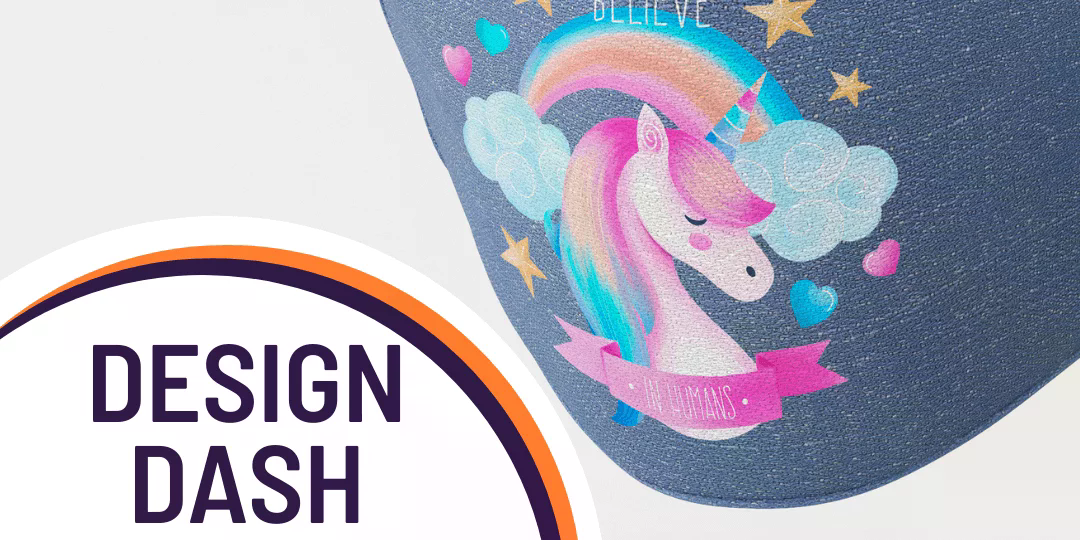
Colorkarma is excited to announce our first Design Dash Contest. With our partner Gerber Technology, we invite all designers and creatives to submit their colorful, inspiring, calming, fun and creative design patterns for face-masks.

I come from a printing background, developed over time after graduation, where I was skilled in both design and PostScript ‚Äî the language that produced digital designs on printers. It was the ’90s, where digital printing was in its infancy.

We visit with Frank Romano to learn about the History of Chromolithography.

Why does the color look different in a store than at home? Understanding color perception helps designers minimize color change.
Companies are continually streamlining. The coronavirus has required some operations to digitize and change quickly. We are now at the cusp of the automated and digitized supply chain, design to shelf.

With new information each day about COVID-19, it is time for designers to help life-science tell their story, and make a difference using visual storytelling.
