
Determined to protect the Springs name and heritage, Kathy Phillips has reinvented Springs Textile, offerings historical textile patterns to designers.
At the AATCC/SGIA Digital Textile Printing Conference 4.0 last December, one of the high points was a presentation by Kathy Phillips, Vice President of Design/Trend at Springs Creative, a show-and-tell that highlighted the company’s rich history in textiles, beginning with the founding of the Fort Mill Manufacturing Company in 1887 by Samuel Elliot White. We talked with Phillips to get more detail on this fascinating story to share with our readers.

FORT MILL MANUFACTURING COMPANY
Samuel Elliot White founded the Fort Mill Manufacturing Company in 1887 in South Carolina. Over the years, the company has evolved, including the combination of five South Carolina cotton mills into one company the Springs Cotton Mill, run by his son Elliot White Springs in 1933. By 1959, Springs Cotton Mill was the largest manufacturer of sheets and pillowcases in the world, producing more than 20,000 sheets per week under iconic brands such as Springmaid and Wamsutta.
Elliot White Springs (1896–1959): South Carolina businessman and an American flying ace. A daring aviator, he was the fifth-ranking U.S. Pilot of World War I. After his father’s death during the Depression, Springs was forced to take command of the Springs family cotton mills. He was the mastermind behind the Risqué Springmaid sheet ads. He forever changed the American advertising with his famous series of ads that he wrote and designed himself.
REINVENTING SPRINGS
By 2019, after shedding several parts of the business, Springs Creative was the last textile company with the name “Springs.” Kathy Phillips, Vice President of Design/Trend, and her team are zealously guarding the heritage of the company in the form of more than 600,000 antique documents accumulated over the years in a vast library. These include not only Springs’ designs, but also the Ilene Danchig Documentary Textile Collections acquired in 2017, all under the brand Baxter Mill Archive.

The analog version of the library is captured in a number of card catalogs consisting of 5 x 7-inch cards that include swatches and a number of tags identifying the swatches. “This was a library for our inhouse designers to use as inspiration,” Phillips explains. “When I started with the company in 1998, if we were doing Wamsutta bedding or bath, for example, we would go into the card catalog and look for inspiration by era, motif, or other characteristics. We believe there are about 400,000 cards in the collection. We also inherited the flat files—which contain all the hand painted artwork/designs created when textile designers hand painted everything on boards. There are about 100,000 of those.”

Phillips left the company for a time and then returned five years ago. At the time, the company was looking for ways to commercialize this massive collection. “We didn’t have a name for the archive,” Phillips notes, “so we created the Baxter Mill Archive. Baxter is our CEO Derick Close’s daughter’s name and an old family surname.” It has been a massive undertaking to tag every single archive, giving each piece a number, and scanning them (with the help of summer interns) to build a digital platform that can be used internally and eventually externally as inspiration for the company’s fabric-by-the-yard business with customers such as Joanne Fabric and Hobby Lobby. “An example would be Joanne Fabric looking for a new flannel design with birds,” she adds. “We can dig into our archive for that inspiration.”
In 2017, Springs Creative purchased the Ilene Danchig collection with more than 100,000 pieces. “Ilene traveled all over the world. My favorite quote from Ilene is: ‘Some people collect diamonds; I collect textiles,’” Phillips says. “Her eye for fabric was incredible; it’s a wonderful collection that complements the Baxter Mill Archives. When Ilene wanted to sell her archive, she was thrilled to meet Derick Close, the CEO of Springs Creative, who was going to keep it together, recognizing it as her collection.”

SPRINGS – A LEADING SUPPLIER
Springs Creative is a leading supplier of fabric for the DIY, craft, hobby, and home sewing textile markets. In 2014, the company purchased a Mimaki dye-sublimation printer for R&D purposes. “We quickly discovered that we could use the printer for commercial purposes as well,” Phillips reports. Springs has licenses with Disney and many other iconic brands.” She recounts a situation with Disney’s Frozen(the original movie) where Joanne Fabric needed additional fabric quickly due to the unexpectedly high interest in the movie. Springs was able to print a 40,000-yard order in a two-week turnaround. “Needless to say, that was the start to our digital printing business,” she adds. Today, the company has two direct-to-cotton digital textile printers and five dye-sublimation printers, as well as an HP Latex wide-format printer for wallpaper. “Springs Creative is a premiere partner for curating upholstery and collections for residential and commercial use,” Phillips explains. “We now combine our world class digital technology and our treasure trove of archives to create truly unique and beautiful products for the home industry.”


“The beauty of digital print is not just about printing quickly,” Phillips continues. “You can also use a virtually unlimited number of colors. Instead of weaving a fabric, you can scan in an original woven document or an 18th-century needlepoint and print the designs on beautiful fabrics creating a 3D effect.”
Archive availability and licensing today is B2B. The company sells and licenses the majority of its archives to the home furnishings and fashion industries. “For example, Anthropologie may lease a 19th-century antique throw as inspiration for a home design product,” Phillips notes. “We will lease the design for two years, with the option of renewal. This way, we are able to keep the original document in our archive library. We are examining various business models to understand what would work best, for us and for potential customers. We are currently digitizing the archives to be available online. That being said, there is something about the tactile nature of seeing these fabrics live. My favorite part is when someone comes in, sees an Italian Renaissance velvet piece, and can’t believe they are touching it (with gloves, of course!). So another goal is building a place for people to come in for an experience with lab coats and gloves, and go archive diving! We want to build an ‘experience for everyone to explore the beauty and history of textiles around the world!’”


Join the Color Collective
Registration is FREE and only takes a moment
- Latest industry advice
- News, Article, Technology
- Events & Awards,
- And lots more...
Related Posts

It is estimated that more than 25% of all work activities will be displaced by automation by 2030. But what does this mean for textile designers?

October 2020 employment figures are at least moving in the right direction from September, albeit slowly; overall printing employment in October was up +0.8% from September, with the gains predominantly in production staff continuing to come back. Let’s not look at year-over-year changes in graphic arts employment

10 things a designer should ask their printer before starting a project – colors, paper, proofing, finishing, services and more.

I do a lot of branding work with clients and talking about color can be tricky. It’s important to get it right – from the brand logo to the product color to the packaging.

Lesson: A great relationship can change quickly; it’s more important to have the difficult…
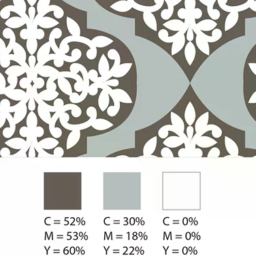
Everyone’s eyes perceive color a little differently, which can make working with color a challenge. However, if you can find a common color language to communicate, the process becomes a whole lot easier.

Pressure on the environmental impact continues for textile and apparel companies. Sheep, Inc. is taking a creative approach towards carbon-neutral operations.
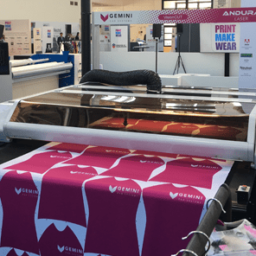
This year’s FESPA Global Print Expo in Munich was an explosion of digital printing.

Designing in repeat is a unique skill. Though it is something that almost anyone can do(thanks to simple repeat applications), it often isn’t done well.

As businesses reopen, they will require COVID safety signs and distancing dots. Richard Romano identifies some unique samples restaurants are likely to need.

Richard Romano spoke with Dexter Johnson, author 5G in Signage Technology about the technology and the advantages of 5G and its potential applications in sign and display.

There samples of printing all around us. Taking a summer stroll down the main street I highlight examples of printed material that many may not be aware of.

On-demand manufacturers are seeing increased demand, due to the pandemic along with a shift in the industry to manufacture more efficiency with sustainability.

We look at how colorkarma and Gerber Technologies’ new PPE Matchmaking can help companies shift their businesses and find new revenue opportunities.
Join us as we chat with Cary Sherburne from WhatTheyThink, talking about AATCC’s digital textile event and the growing market and lessons learned from the past.
