
What’s the current state of digitally printed packaging? NAPCO shares their latest research 'Digital packaging: The Time is Now!'
North American Publishing Company (NAPCO), recently released it’s latest research paper, ‘Digital Packaging: The Time Is Now!’ The paper focused on changes in attitudes toward digital packaging and how technology is no longer the limiting factor in adoption.
What’s the current state of digitally printed packaging? “Digital Packaging: The Time Is Now!” from NAPCO Research, gives us key insights. While the growth of digital packaging is a common topic of discussion in our industry, it was interesting to get a deeper look at this growing category. While much of the NAPCO data centered around products and production-related issues, such as run lengths, turnarounds, and application types, the data of most interest to me related to how packaging is being used to support marketing.

Here are some highlights from the report:
- 79% of brand owners agreed that packaging is a key marketing tool for their company.
- 60% of brand owners reported that customizing or personalizing packaging had a positive effect on sales.
- Packaging is seen as an important part of a brand’s marketing strategy and in many respects the fifth “P” of the marketing mix.
- 40% of brand owners cited “designing packaging that influences purchasing” as a top priority.
- 80% of brand owners prefer print providers that offer digital printing capabilities as an option.

These data are consistent with other “Digital Packaging” data showing technology limitations no longer being a major obstacle in adoption. From my experience, “technology limitations” refers primarily to things like format size, substrates, color gamut, and print quality. Certainly, challenges in these areas still exist, but production issues are no longer a primary factor holding it back. This is seen as the case even among printers/converters not producing digital packaging. “Customer resistance” was not cited as a significant barrier to printing packaging digitally either.
When asked to identify the top obstacles for printing packaging (and labels, specifically), the top response among printers/converters was matching colors across digital and conventional equipment, with 52% citing this as a top obstacle (although in the interviews, the use of color management practices, operator training, and technological innovations were seen to have lessened this difficulty).

But while cross-process color matching remains a challenge, it does not appear to be a limiting factor in adoption. Indeed, among those who don’t offer digital printing, only 11% cited cross-process color match as one of the reasons they have not made this investment. Likewise, only 5% cited “can’t print white well enough” and 3% cited “resolution or imagine quality is not high enough.”
Although there are still some sticking points (such as substrate limitations, with 30% of digital packaging printers/converters still citing this as a concern), overall, hesitance in adding this capability doesn’t seem to be technology. Rather, the top reason for not having made this investment is that it doesn’t fit the printer or converter’s product mix, with 32% of non-digital printer/converters giving this answer. The next most popular reason for not investing in digital packaging was that they were perfectly happy to outsource it, at 16%.
From a brand perspective, we see the similar lack of emphasis on technology as a limiting factor. When it comes to barriers to adoption, developing the right applications and managing customization and personalization are at the top of the list. These are really issues of framing and redirecting. Brands also cited complying with regulations, meeting environmental standards, and adding security features as continued challenges, all of which are classic packaging challenges, just being met in a new environment.
All of this is great news for commercial printers looking to get into packaging or expand their packaging business. Brand owners see packaging not just as pretty, eye-catching containers, but as extensions of their marketing strategies. This creates real opportunities for the use of customization, print-to-mobile strategies, personalization, and other marketing tools that are squarely in the wheelhouse of marketing-oriented print providers.

Join the Color Collective
Registration is FREE and only takes a moment
- Latest industry advice
- News, Article, Technology
- Events & Awards,
- And lots more...
Related Posts

It is estimated that more than 25% of all work activities will be displaced by automation by 2030. But what does this mean for textile designers?

Brand managers, marketers, and designers must begin to consider how online grocery services impact the ultimate moment of truth.
Untappd took the lessons from their first virtual event and made the European event incrementally better.

I read a lot of packaging trend reports and commentary. One thing is clear – many different packaging trends are happening at the moment – it all depends on what market and industry you find you find yourself.

October 2020 employment figures are at least moving in the right direction from September, albeit slowly; overall printing employment in October was up +0.8% from September, with the gains predominantly in production staff continuing to come back. Let’s not look at year-over-year changes in graphic arts employment

10 things a designer should ask their printer before starting a project – colors, paper, proofing, finishing, services and more.

I do a lot of branding work with clients and talking about color can be tricky. It’s important to get it right – from the brand logo to the product color to the packaging.

Lesson: A great relationship can change quickly; it’s more important to have the difficult…
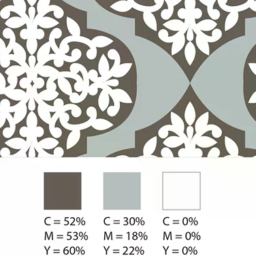
Everyone’s eyes perceive color a little differently, which can make working with color a challenge. However, if you can find a common color language to communicate, the process becomes a whole lot easier.

Pressure on the environmental impact continues for textile and apparel companies. Sheep, Inc. is taking a creative approach towards carbon-neutral operations.
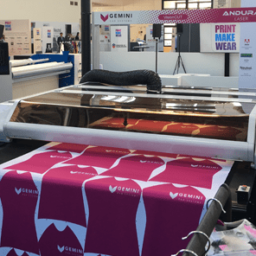
This year’s FESPA Global Print Expo in Munich was an explosion of digital printing.

As businesses reopen, they will require COVID safety signs and distancing dots. Richard Romano identifies some unique samples restaurants are likely to need.

Richard Romano spoke with Dexter Johnson, author 5G in Signage Technology about the technology and the advantages of 5G and its potential applications in sign and display.

There samples of printing all around us. Taking a summer stroll down the main street I highlight examples of printed material that many may not be aware of.

On-demand manufacturers are seeing increased demand, due to the pandemic along with a shift in the industry to manufacture more efficiency with sustainability.
