
Being a creative in 2020 means being a part of a world where anything is possible. That might sound somewhat idealistic, but it’s a different situation to the past when we saw our role as designing a piece of artwork that was going to be reproduced on a piece of paper. In times past if we were designing for print, it meant describing how we wanted to create content in CMYK inks, and how we were going to compose our artwork relative to the rectangle of a press sheet.

For a period of time, we’ve become used to the idea of the creative process being liberated from the constraints of paper media – we’ve been designing for the web and other virtual worlds where our artwork never makes its way onto a tangible piece that can be touched or see the light of day, let alone the light of our houses. We’ve become addicted to our screens and the idea that ‘looking good’ is reflected in the number of ‘likes’ our images receive. Unfortunately, it’s pretty hard to make a living from social recognition and at some point we want to make stuff for the real world – we want to take our artwork off the screen and turn it into something that can be offered for sale and purchased. It doesn’t matter if we’re a designer for a major company who is paying our salary, or if we’re freelancing for a studio, or if we’re looking to sell our own products – the question of seeing how our design will look when reproduced is hugely important.

The concepts of ‘Desktop Publishing’ of the 1980s have evolved into ‘Desktop design’ or even ‘Mobile design’ of today. At the same time, the concept of ‘printing’ that design is now a part of manufacturing. When we make products featuring our designs we might do so in volume – storing them before sale or distribution (likely incurring up-front costs) – or we make those products only when we have a recipient ready to receive and maybe even pay for them. Digital manufacturing upsets the ‘economies of scale’ that we’re used to hearing about by looking at the entire end-to-end process involved in delivering the product to its final home.
Growing up, the holiday cards my family sent were purchased in pre-printed boxes of 24. We’d write a note inside and send them to our friends, all receiving the same snowy scene that had been created by an artist maybe a year earlier and printed and warehoused by a greeting card company in the summer before distribution to stores in the fall. Today, I’m more likely to buy customized cards – still designed by an artist but featuring a personalized sentiment or even a photo of my family. I might even send those cards directly to my friends by typing their address into a website. I could still start in September if I want to – or I can procrastinate until mid-December. The entire process still involves a designer, and a printer, and a purchaser and a recipient amongst others but I might never actually hold a copy of that card myself.

We’re used to being able to design on our computers and print on our printers at home – which was the foundation of the desktop publishing industry – but once we want to involve a more complex manufacturing process then how do we address the problems of providing our artwork, describing how it relates to a finished product and being willing spend money on ordering that product – let alone allowing our customer to spend their money – without anyone seeing the finished product in advance?
Adobe Design to Print

Rather than imagine how the design will look when manufactured, Design for Print shows a visualization of the finished product – a real-time preview of the design as it would look when made and delivered. We can see the position of the art relative to the edges, folds and curves of the object.
If we want to make an alteration, there’s no complicated process – we just adjust our design and see how the finished product would be affected in real-time, all within the application.
Once we’re happy with the design, publishing it is as simple as clicking on a button and all the required assets and product intent is transferred to the cloud where you can purchase it yourself, or offer it for sale to others.
If you’re selling a product to others, they may not want your design exactly as you’ve presented it. Festive though your art might be they may prefer to insert their own message or a photo that means something particular to them. To that end, we’ve enabled the ability to for the designer to label some of the design elements as “templates” – parts of the design that the customer can replace at the time of ordering.
- An ability to convey the artwork from the designer to the manufacturer without limiting the creativity of the designer and while preserving the quality, removing the confusion of file transfer and format.
- A common understanding between designer and manufacturer of the intent of the product – all the attributes that aren’t part of the artwork but are essential to relationship between the artwork and the physical item.
- A visualization of the product, showing the artwork as it would appear when manufactured with the intent.
- The Adobe Design to Print plugin for Adobe Photoshop is available now. We look forward to you seeing the finished product.
Join the Color Collective
Registration is FREE and only takes a moment
- Latest industry advice
- News, Article, Technology
- Events & Awards,
- And lots more...
Related Posts

We chat with Ryan Stanley from PVH about the digitization of the brand’s color palette and the value of partnerships between design teams and color and material groups.

Most of us are now working virtually, and those who have children find themselves now homeschooling as well. If you are looking for an art activity, coloring eggs might be on your list this week…

Brand managers, marketers, and designers must begin to consider how online grocery services impact the ultimate moment of truth.
Untappd took the lessons from their first virtual event and made the European event incrementally better.

We have seen consumer shifts over the last year to digital. COVID has accelerated the growth of e-commerce and forced events to go virtual. It is in times of challenge that some of the best innovations emerge.
One of 100 Summit celebrates packing design. This year’s winner focused on sustainability, personalization and innovation.
Designers have a new tool with Inkjet technology. From personalized bottles to floorings & decor, and innovative materials has created new markets.

A recent visit to Sephora gave me an opportunity to get a male employee’s perspectives on packaging. It may surprise you.

I read a lot of packaging trend reports and commentary. One thing is clear – many different packaging trends are happening at the moment – it all depends on what market and industry you find you find yourself.

Stumped on what to get for the holidays? Let us help. Our Top 10 Gifts have ideas for designers, marketers, photographers and more.
Design processes were already moving towards 3D and digital. Our Design Dash is for all designers to begin thinking of designing in 3D.
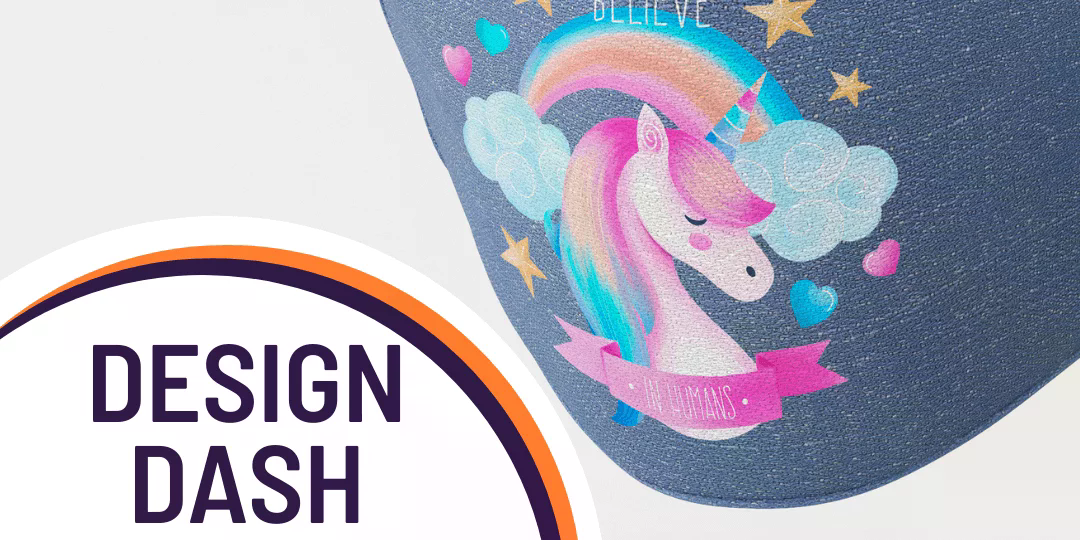
Colorkarma is excited to announce our first Design Dash Contest. With our partner Gerber Technology, we invite all designers and creatives to submit their colorful, inspiring, calming, fun and creative design patterns for face-masks.

I come from a printing background, developed over time after graduation, where I was skilled in both design and PostScript ‚Äî the language that produced digital designs on printers. It was the ’90s, where digital printing was in its infancy.

We visit with Frank Romano to learn about the History of Chromolithography.

Why does the color look different in a store than at home? Understanding color perception helps designers minimize color change.
